The House of Lords · Notes + essay plan
Essay plan - line of argument and three themes
- Unelected chamber problem. 800+ peers, none elected; only chamber in any major democracy where life-appointed members can vote on legislation. Conflicts with the 9PL0 spec principle of representative democracy.
- Patronage abuse. Truss 2022 resignation honours list - she appointed peers after 49 days in office. PM appointment power without HOLAC veto produces cronyism risk that elections would remove.
- Composition is unrepresentative. Lords are older, whiter, more male and more London-based than the population; expert "Lord X of Y" by patronage not by election.
- Expert scrutiny. Crossbench peers - judges, scientists, surgeons, former ambassadors - bring expertise the Commons cannot replicate. Lord Bingham, Baroness Hale, Lord Sumption all sat in the Lords; debate on the Assisted Dying Bill 2024-25 showcased depth elections cannot deliver.
- No rival mandate. Elected second chamber would have democratic legitimacy to block Commons legislation, producing gridlock as in Italy and Australia. The current Lords accept the Salisbury Convention (no blocking of manifesto bills) precisely because they have no mandate.
- Lords actually amends well. 2,800+ amendments to Brexit legislation 2017-19; the Lords forced government concessions on Rwanda Bill 2023-24. The chamber does its job under existing rules.
- Labour's 2024 manifesto pledge delivered. The Hereditary Peers Act 2024 removed the remaining 92 hereditary peers - the last vestige of birth-right voting on UK legislation. This is meaningful reform without dismantling the chamber.
- HOLAC and statutory caps. The Burns Report (2017) proposed a cap of 600 members. Statutory HOLAC veto on PM appointments would stop patronage abuse without elections.
- Retirement and fixed-term peerages. 15-year non-renewable terms would refresh the chamber. Steel Bill 2014 and 2024 House of Lords (Peerage Nominations) Bill point this direction.
Conclusion route: Replacement is the wrong reform. A fully elected second chamber would gain democratic legitimacy but lose expert scrutiny and create constitutional gridlock. Labour's 2024 Hereditary Peers Act plus a statutory HOLAC and a cap on numbers achieves the legitimate complaints without sacrificing what works.
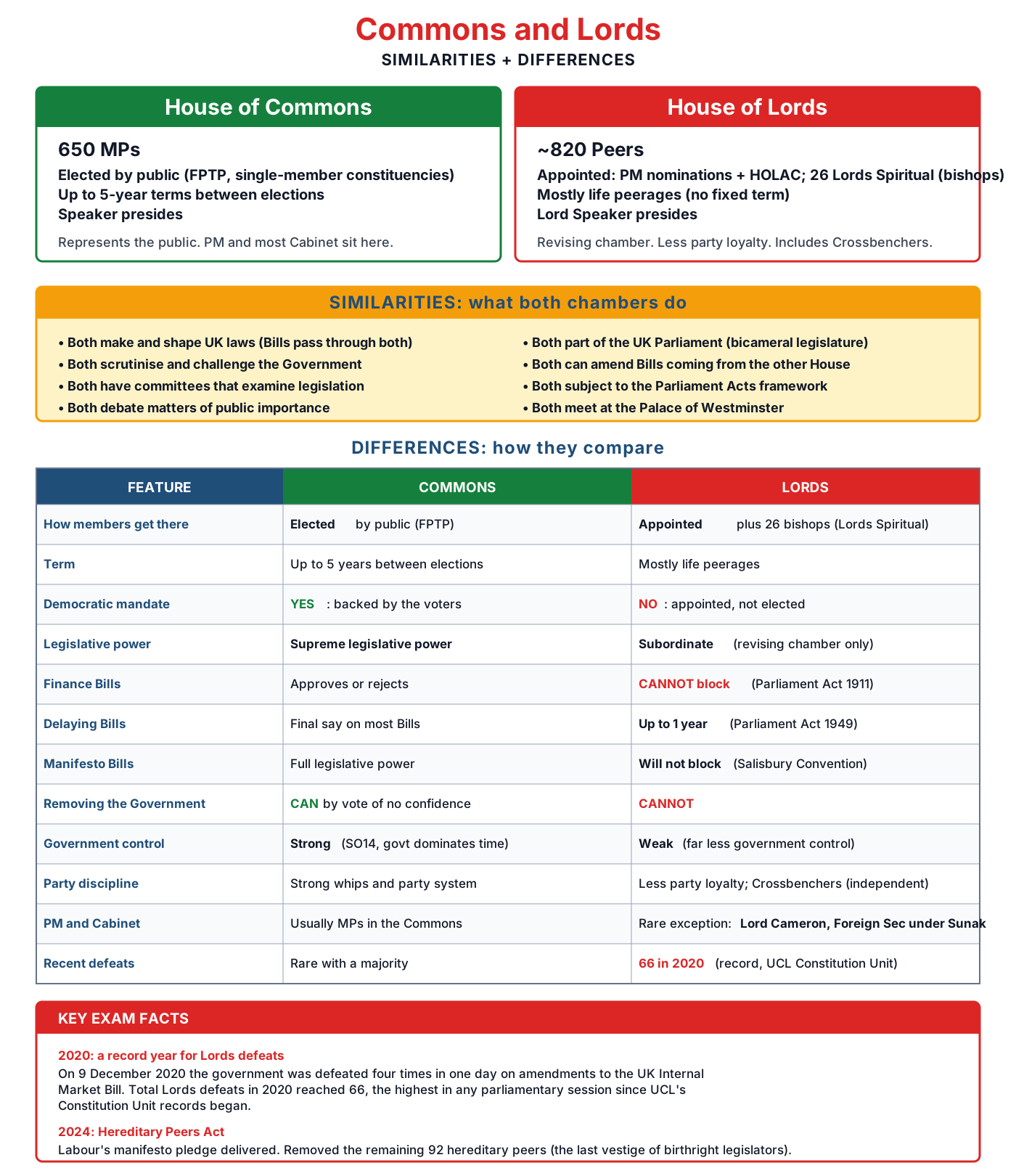
Commons vs Lords at a glance
One picture for the whole essay. Dual header cards (650 MPs elected vs ~820 Peers appointed), yellow Similarities band, 12-row Differences table covering composition, mandate, legislative power, Finance Bills (Parliament Act 1911), delaying Bills (Parliament Act 1949), manifesto Bills (Salisbury Convention), removing the Government, party discipline, and recent Lords defeats. Key Exam Facts box at the bottom carries the 2020 record (66 government defeats, including four in one day on the Internal Market Bill) and the 2024 Hereditary Peers Act.
1. Lords reform timeline 1911-2024
Parliament Act 1911. Removed Lords' veto over money bills; reduced legislative veto to a 2-year delay. Triggered by the People's Budget crisis.
Parliament Act 1949. Reduced delay further from 2 years to 1 year. Attlee's response to Lords obstruction.
Life Peerages Act 1958. Created life peerages alongside hereditary peerages. Allowed appointment without birthright. Opened the chamber to women and to expert appointees.
House of Lords Act 1999. Removed all but 92 hereditary peers. The most substantial Blair-era reform. The 92 were retained as a deal to get the Bill through.
White Paper. Cross-party White Paper proposed a 50% or 80% elected chamber. Commons voted for fully elected; Lords voted against. No agreement.
Clegg Bill withdrawn. Coalition's House of Lords Reform Bill - 80% elected, single 15-year terms - withdrawn after 91 Conservative backbenchers rebelled. The "second wave" of reform collapsed.
Steel Act. Allowed peers to retire; expelled non-attenders. Modest tidying-up reform passed under coalition.
Burns Report. Lord Burns Committee recommended capping the chamber at 600 with 15-year terms; voluntary retirement scheme. Not enacted.
Hereditary Peers Act 2024. Labour's manifesto pledge delivered. Removed the remaining 92 hereditary peers. The most significant reform since 1999.
Roll up and down: the arrows, scroll or swipe inside the box, the up and down keys, or click a year above.
The reform pattern: Substantial reform happens roughly every 50 years (1911, 1949, 1999, 2024); incremental reform never adds up to replacement. The constitutional inertia favours retention plus tweaks.
2. The case for an elected chamber
Democratic legitimacy
In a representative democracy, those who make law should be accountable to those who live under it. The Lords' members are appointed for life by the PM (and historically by birthright). No vote of the public can remove them. The only equivalent in any major democracy is the now-defunct Senate of Lesotho and a handful of partially-appointed chambers.
Patronage abuse
The PM appoints peers. There is no statutory cap. The chamber has grown from 666 in 1999 to over 820 in 2024. Truss's 2022 resignation honours list - drafted after only 49 days in office - showed how unconstrained the power is. Johnson's 2020 list appointed peers including his brother and a then-29-year-old donor's son. The Cameron 2016 list included party staff and donors.
Composition is unrepresentative
The Lords averages 71 years of age. Women make up roughly 30%; people from ethnic minorities under 7%. Most peers live in London or the South East. The chamber is older, whiter, more male and more London-based than the country. No election would produce this composition. The Hansard Society's 2023 audit documented these patterns in detail.
The argument for partial election
Most reformers do not want a US-Senate-style fully elected chamber - they want partial election (60-80%) with reserved expert appointments. Wakeham 2000 and Clegg 2012 both proposed hybrid models. This preserves expert scrutiny while addressing the democratic legitimacy gap.
3. The case for retaining the appointed Lords
Expert scrutiny the Commons cannot match
The Lords contains crossbench peers - life-appointed independents - with deep expertise in fields where the Commons is weak. Lord Sumption (former Supreme Court Justice), Baroness Hale (former President of the Supreme Court), Lord Bingham (Senior Law Lord) all sat or sit in the Lords. Scientific cross-bench: Lord Winston (IVF pioneer), Lord Krebs (former Food Standards Agency chair). Medical: Lord Darzi (surgeon), Baroness Finlay (palliative care). Foreign affairs: former ambassadors and security chiefs.
The 2024-25 Assisted Dying Bill debate showcased the depth of Lords contribution - medical, ethical, judicial expertise that the Commons could not match.
No rival mandate
The Lords accept the supremacy of the Commons. The Salisbury Convention (no blocking of manifesto bills) and the broader convention that the Lords does not push amendments more than twice both depend on the Lords lacking an electoral mandate. An elected second chamber would have democratic legitimacy to block - producing US-style gridlock or Italian-style instability.
The Italian Senate example: equal-powers elected upper house produces years where governments cannot pass legislation. Australian Senate: proportional representation produces hung Senates that block budgets (1975 constitutional crisis).
The Lords actually amends well
Recent record shows the chamber doing its scrutiny job. 2,800+ amendments to Brexit legislation 2017-19. Rwanda Bill 2023-24: ten government defeats forced concessions on safety designation and unaccompanied children. Illegal Migration Bill 2023: 20 Lords defeats. Online Safety Act 2023: substantial Lords amendments shaped the final text.
Cost and continuity
Lords sits roughly twice as many days as the Commons, costs around half the salary bill per member, and provides legislative continuity across the political cycle. A new elected chamber would cost more, sit less, and lose the institutional memory the appointed chamber accumulates.
4. Alternative reforms short of replacement
Statutory cap on numbers
Burns Report 2017 recommended capping the chamber at 600 members (down from 820+). PM appointments would be tied to election results - the winning party's share. This would address the patronage abuse and the chamber's size problem without abolition.
Statutory HOLAC veto
The House of Lords Appointments Commission (HOLAC) currently only advises the PM. A statutory HOLAC with a veto on appointments for propriety or merit would constrain patronage. The 2024 House of Lords (Peerage Nominations) Bill by Baroness Hayman would do this.
Fixed-term peerages
15-year non-renewable terms (Clegg 2012, Burns 2017) would refresh the chamber and remove the life-tenure objection without elections. Peers would still be appointed but not for life.
Removal of remaining hereditaries (delivered 2024)
The Hereditary Peers Act 2024 removed the remaining 92 hereditary peers in stages. Labour's 2024 manifesto pledge delivered. The last vestige of birthright legislators in any major democracy.
Compulsory retirement age
Burns Report suggested 80. Currently the average age is 71. A retirement age would address composition without elections.
5. Exam traps and high-band moves
The trap most students fall into
High-band moves
- Distinguish "the chamber needs reform" from "the chamber should be replaced." The first is widely accepted; the second is controversial. Most reformers want hybrid not full election.
- Use the Italian Senate or Australian Senate as comparative warnings - elected upper chambers produce gridlock or constitutional crises.
- Use the Salisbury Convention as the key conceptual hinge: the Lords accept Commons supremacy because they lack a mandate. Elections destroy that.
- Cite the 2023-24 Rwanda Bill as evidence of effective Lords scrutiny under existing rules.
- Reach a clear interim judgement on each theme - tilt towards retention with reform, against replacement.